Industrial Insights: The transformer industry’s next big challenge
The transformer industry’s next big challenge: Scaling production without compromising quality.
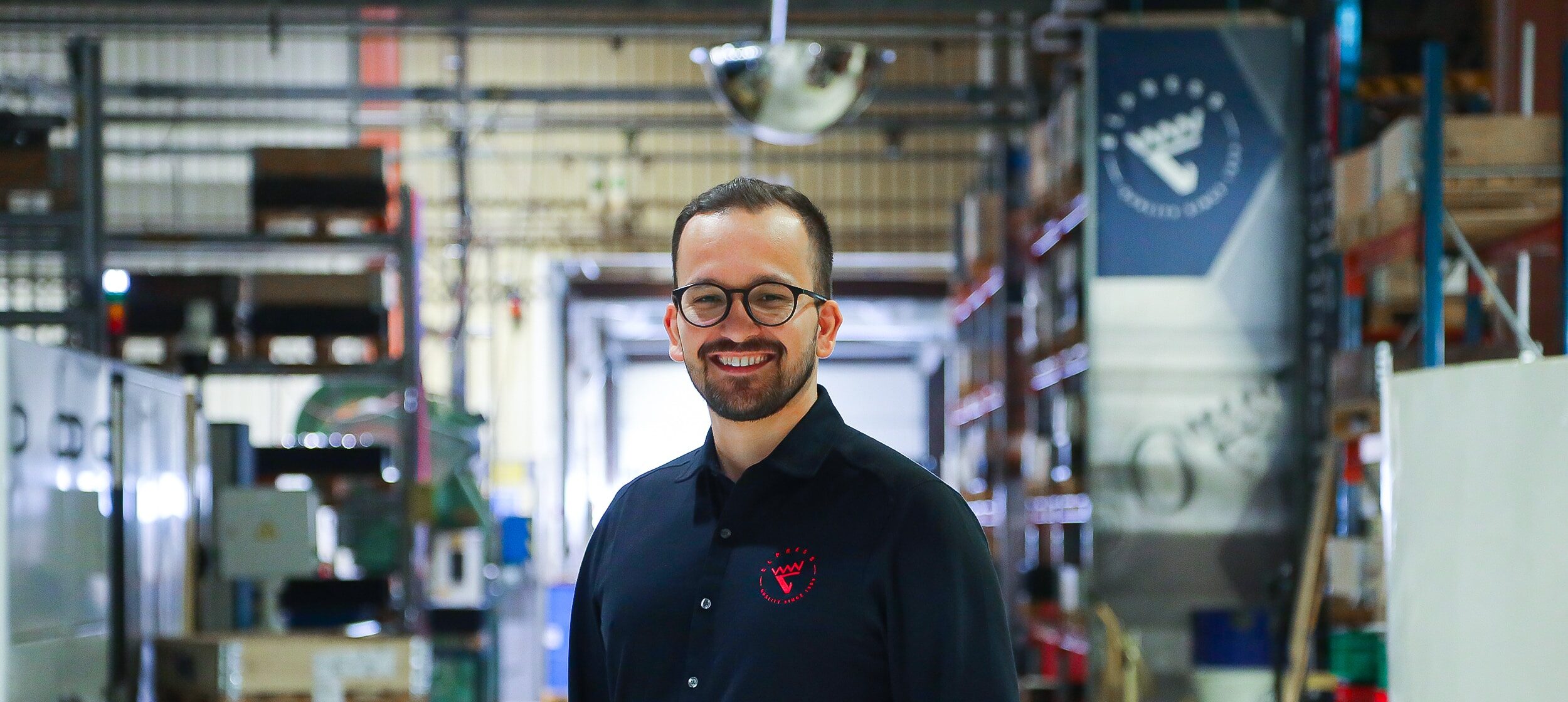
As global demand for transformers accelerates, manufacturers face a challenge that goes far beyond increasing production capacity. According to Victor Moraes, Segment Manager for Electrical Machines at Elpress, the companies that succeed will be those that make quality repeatable, regardless of production volume.
The global transformer industry is entering a period of significant transformation. Grid modernization, renewable energy integration, electric transport and the rapid expansion of data centers are driving demand to levels that many manufacturers could hardly have anticipated just five years ago.
Yet the challenge is not simply producing more transformers. It is maintaining the precision, reliability and consistency required of equipment designed to operate for decades.
We spoke with Victor Moraes about the forces reshaping the transformer industry, the challenges of scaling production and why even the smallest electrical connections have a role to play in its future.
A demand surge that is here to stay
For transformer manufacturers, the balance between supply and demand has shifted dramatically.
“It’s capacity versus demand,” Victor explains. “Grid modernization, renewable integration, electrification of transport, and data center growth are driving transformer demand that most manufacturers didn’t plan for five years ago.”
With order backlogs at major original equipment manufacturers (OEMs) extending well beyond a year in certain segments, manufacturers are under pressure to expand production capacity.
But Victor sees this as more than a temporary market peak.
Utilities are replacing electrical infrastructure that has been in service for 40 to 50 years, while new demand from renewable energy, electric vehicles and data centers continues to grow.
“Those two curves are hitting at once, and that’s unusual. Normally you’d have replacement demand and growth demand spread out over time.”
This convergence creates a long-term challenge for manufacturers: how to increase output while preserving the standards on which the industry depends.
The critical technology behind the energy transition
Transformers rarely receive the same public attention as wind turbines, solar panels or electric vehicles. Yet without them, much of the energy transition would simply not be possible.
“Transformers are the least visible, most critical piece of the energy transition,” Victor says.
Electricity generated by renewable sources must be transformed and distributed through increasingly complex networks. Without sufficient transformer capacity, new generation projects, grid expansions and industrial electrification initiatives risk being delayed.
This makes transformer availability more than a manufacturing issue. It is an important factor in the pace of global electrification.
And as demand grows, so does the pressure on manufacturers to deliver equipment that meets exceptionally high reliability requirements.

Why scaling a transformer factory is different
One of the most common misconceptions about transformer manufacturing is that increased demand can be addressed simply by hiring additional employees or investing in more equipment.
According to Victor, the reality is considerably more complex.
“Scaling a transformer factory isn’t like scaling a generic production line. Every additional operator, every additional shift, has to be brought up to the same exacting standard as the team that’s been doing it for 20 years.”
Transformers are highly engineered assets, often designed for specific applications and operating conditions. Many are expected to remain in service for 30 to 40 years, with limited or no possibility of maintaining certain internal components.
That places exceptional demands on manufacturing processes.
When experienced teams expand, new production shifts are introduced or additional factories open, maintaining consistent quality becomes a central operational challenge.
The objective is not simply to manufacture more units. It is to ensure that every unit meets the same demanding requirements, regardless of who produces it or where it is manufactured.
“The companies that figure out how to scale production without scaling risk will be the ones that succeed.”
Victor Moraes, Elpress

From individual expertise to repeatable processes
Looking ahead five to ten years, Victor expects sustained investment in transformer production across Europe, North America and emerging markets.
New manufacturing facilities, automation and improved production technologies will all play important roles. But he believes another factor will be equally decisive: process standardization.
Historically, many specialized manufacturing tasks have relied heavily on the knowledge and experience of skilled operators.
That expertise remains essential. However, as manufacturers expand their workforces and production volumes, relying exclusively on individual experience introduces variability.Defined procedures, training and appropriate equipment can help reduce that variability.
“The technical fundamentals of transformer manufacturing haven’t changed, but the operational discipline required to do it at higher volume is the real differentiator coming up.”
For manufacturers, the ability to reproduce the same high-quality result across different operators, shifts and facilities will become increasingly valuable.
Why connection reliability matters inside a transformer
One example of this challenge can be found in the electrical connections within a transformer.
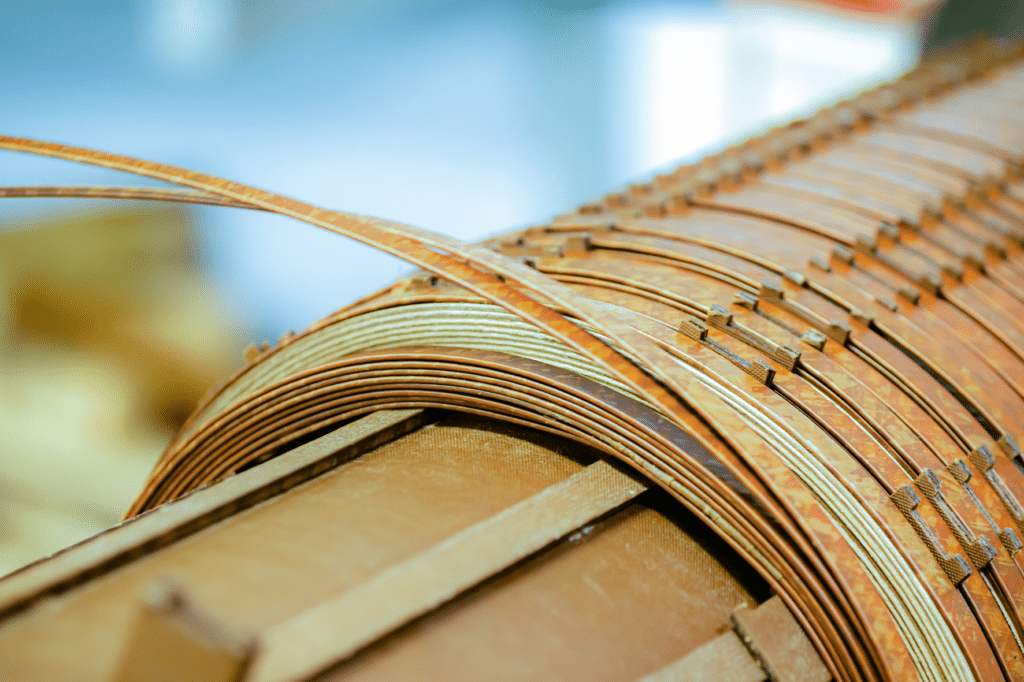
Crimped connections on transformer windings may represent a relatively small part of the overall manufacturing process, but their reliability is essential to the finished equipment.
And despite what some might assume, crimping is far from a simple operation.
“It’s a precision process,” Victor explains. “Conductor diameter, varnish removal, pre-rounding of strands, tool pressure, die selection all have to be exactly right.”
Each step influences the quality of the finished connection. An incorrect procedure or inconsistent execution can compromise the result, even when high-quality components and equipment are used.
This is where a complete, validated crimping system can make a difference.
At Elpress, the approach combines terminals, tools, defined procedures, training and technical support to help manufacturers establish repeatable crimping processes.
Depending on the application, relevant international standards, including IEC 61238, provide a framework for testing and verifying connection performance.
But equipment alone is not enough.
“The tool is maybe half the equation. The other half is the operator, and how consistently they’re trained to use it the same way, every time, on every shift, in every plant.”
By combining the right equipment with standardized working methods and operator training, transformer manufacturers can reduce process variability and support consistent connection quality as production expands.
The future belongs to manufacturers who can scale with confidence
The transformer industry is set to play an increasingly important role in the global energy transition.
But meeting growing demand will require more than new factories, additional employees and increased production capacity.
It will require a manufacturing culture where quality is built into every process and where reliable results can be repeated at scale.
For Victor, that is the defining challenge of the coming decade.
“The transformer industry’s growth story is a people-and-process story as much as a technology story.”
And while the industry’s future is being shaped by major investments in energy infrastructure, its long-term reliability will continue to depend on getting the fundamentals right.
Including every electrical connection.
Meet the expert
Victor Moraes
Segment Manager, Electrical Machines | Elpress
Victor works closely with transformer manufacturers, focusing on reliable electrical connection solutions and the practical challenges of implementing consistent crimping processes in transformer production.